Another common type of decimal time is decimal hours. In 1896, Henri de Sarrauton of the Oran Geographical Society proposed dividing the 24 hours of the day each into 100 decimal minutes, and each minute into 100 decimal seconds. Although endorsed by the Bureau des Longitudes, this proposal failed, but using decimal fractions of an hour to represent the time of day instead of minutes has become common. To convert minutes to hours, divide the number of minutes by 60, which is how many minutes are in 1 hour, to get the equivalent number of hours or fraction of an hour. It would be very desirable that all divisions, for example of the livre, the sou, the toise, the day, the hour, etc. would be from tens into tens.
Further, the new tierce would be divided into 1000 quatierces, which he called "microscopic points of time". He also suggested a week of 10 days and dividing the year into 10 "solar months". Up until now, we've only discussed how to get answers written in hours. However, since time is often written as hours and minutes, it's nice to know how to do this too.

To start, just convert your minute measurement into hours like you learned in the section above. Sometimes you need to know the total time in hours, minutes, or seconds and you need to convert. There are a few ways to convert a time to decimal like this.

The calculator above is the easiest way, but there are some simple formulas to convert the time in different units. Hour is a common time measurement unit equal to 60 minutes, 3,600 seconds, or 1/24 of solar day. The unit is used and recognized by SI and has the symbol of h. Hour as a time measurement unit is extensively used in science and is applied for defining various related measurement units like kilometers per hour, ampere-hour, kilowatt-hour, etc. Aside from seconds , other units such as minutes and hours can also be used for time measurement.

Explore different units of time and learn how to convert units of time through the given examples. This online tool will help you convert time given in hours and minutes to decimal hours and/ or decimal minutes. Among the gifts the ancient Greeks bestowed on civilization, the familiar circular clock face and the hour, minute and second system of measuring time are among the most important.
You have to do a tiny bit of extra math if you want to express the fraction in hundredths, which is usually more useful than a raw fraction. Sometimes you might need to add up how much time you have spent on a task that you have completed over several days or sessions. Adding a list of hours and minutes isn't as straightforward as doing a normal addition calculation, because we are not working with a decimal system. We're very often in need of knowing how many minutes a certain amount of time in hours will take. This webpage offers an effective online hours to minutes calculator which can be used at any time for making this kind of time measurement unit conversions. For your convenience, there is also some useful information related to this kind of conversions.

Also, you can use the hours to minutes conversion chart on the bottom of the page. Calendars are useful tools to help us keep track of events that are going to happen and to plan our lives accordingly. We can add information to them about important events and dates to a calendar, to help us remember what is happening when. We can read off days, weeks and months on a calendar and do conversions between these units of time.

To calculate payroll to the precise minute rather than by rounding, you need to convert the minutes to a decimal. You do this by dividing the minutes worked by 60. You then have the hours and minutes in numerical form, which you can multiply by the wage rate.
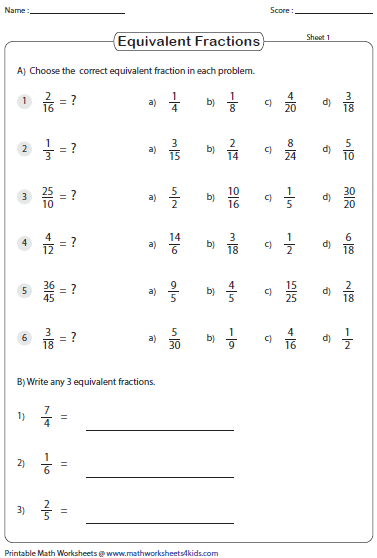
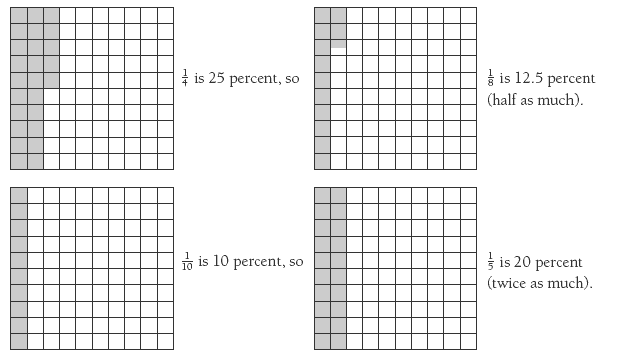
Numbers like 1/6 and 6/15 of an hour may be accurate, but they aren't always easy to compare with other time measurements. Converting to hundredths of an hour makes the number more useful. Other answers discuss writing the quantity as words.

When writing things as numerals, however, I would suggest that the decimal fraction .5 as being a perfectly good way of indicating "half". Convert a time or duration to the total hours, minutes, or seconds in decimal form. The calculator will add the input hours, minutes and seconds and output the totals as a decimal.

The following quick conversion table contains both calculations, minutes converted to decimal hours as well as min to min + h. Some decimal time proposals are based upon alternate units of metric time. Just as standard time uses the metric time unit of the second as its basis, proposed decimal time scales may use alternative metric units. The Toulouse Chamber of Commerce adopted a resolution supporting his proposal in April 1897. Although widely published, the proposal received little backing. Here are short and long conversion charts for minutes to decimal hours which can help people who are entering hours in hours and minutes.

Minute is a unit of time measurement that is equal to 1/60 of an hour or 60 seconds. Minute is also a unit used in geometry for measuring angle, as well as for defining latitude and longitude of a point on the surface of earth. For example, decimal days divide the day into 10 equal parts, and decimal years divide the year into 10 equal parts. Decimals are easier to plot than both minutes and seconds, which uses the sexagesimal numbering system, hours, months and days, which has irregular month lengths. In astronomy, the so-called Julian day uses decimal days centered on Greenwich noon. In principle, time spans greater than one second may be given in units such as kiloseconds , megaseconds , gigaseconds , and so on.
Occasionally, these units can be found in technical literature, but traditional units like minutes, hours, days and years are much more common, and are accepted for use with SI. Unless your minutes converted perfectly to hours, you'll have an answer with a decimal or fraction in it. Leave the whole number alone — we're only dealing with the "extra" decimal or fraction part.

Not sure how to change a time in minutes to a time in hours? It's easy to make this conversion task in just a few simple steps. As a general rule, dividing your number of minutes by 60 will give you the same time in hours. This is because there are exactly 60 minutes in an hour. Timetables are similar to calendars in that they help us plan our time. Where calendars are useful for planning months and years, timetables are useful for planning shorter periods of time like hours, days and weeks.
You may already be familiar with timetables like those for your different classes at school, and for TV shows. In this section we will learn how to read timetables and how to draw up our own. Nolan practices the piano for 1 2/5 hours every Saturday and Sunday. Here is the next number of hours and minutes on our list that we have converted to decimal.

In the normal way of things, to calculate how much one thing is greater than another you would simply subtract one from another. However, subtracting time is complicated because it's not decimal. Instead of the columns being hundreds, tens and units, they are hours, minutes and seconds. The unitary method sometimes makes constant rate questions quite straightforward. The plan did not gain acceptance and was abandoned in 1900.

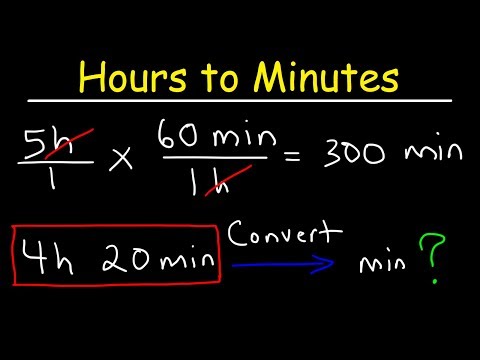
Now, we will solve different types of problems on ratios in simplest form where both the quantities in different units. So, before finding the required ratio, we shall have to express both the quantities in the same units. Multiply by "1 hour/60 minutes." Next, write a multiplication sign (×), then the fraction 1 hour/60 minutes. This fraction shows how many minutes are in an hour . When we multiply, we'll end up with the correct units, too (since the two "minutes") cancel out. I got so caught up solving for the portion that Joseph completed in the hour that I completely forgot to multiply by 1/3 at the end to actually answer the question.
In an effort to complete the question fast, I picked E. If I read the question one more time after doing the math, I would have gotten it correct. For example, we can't compare a time in minutes with a number of hours. We must first convert the time in hours to minutes. Here you can convert another number of hours and minutes to decimal.

A fraction is found by setting up a ratio between a whole and its parts. The denominator, is the total number of parts, while the numerator, indicates how many parts are involved. However, with a bit of application, you too can learn how to calculate with time, and gain confidence in manipulating hours, minutes and seconds.

Because one hour is equal to sixty minutes, in order to convert 140 minutes to hours you have to divide the number of minutes, 140, by 60. Here you can change the time in minutes to hours only . Convert the following to minutes or hours and minutes as appropriate. Roll your mouse over the question to check your answer. Here we will learn how to find the problems on ratios in simplest form. In order to express a ratio in the simplest form, we find the HCF of the terms and divide each term by the HCF.

Here are the steps to subtract time (4 hours 45 minutes - 2 hours 20 minutes) given in hours and minutes. First, convert 15 minutes to hours by dividing 15 by 60, which is .25. The converter made it so much easier to understand my pay hours and with figuring out my hours and minutes I worked for the week.

What Is 2 Hours 20 Minutes As A Decimal They are more precise - decimal hours are almost 2 times more precise than minute hours. Minute hours have a maximum of 1/60 resolution, while decimal hours have a 1/100 resolution. Peter spends 2 hours and 15 minutes doing his maths and another 1 hour and 30 minutes on English. What fraction of the day does he spend doing homework. Unlike most other measurements in the metric system, hours and minutes are not on a base 10 system. Since there are 60 minutes in one hour, this means that when we have more than 60 minutes we increment the hours by 1.

For example, if an employee worked one hour and 20 minutes, you would type 1.333 in the Duration field. The following chart shows how minutes are converted to a fraction of an hour by dividing the number of minutes by 60. All you need to do is divide your minutes by 60. For example, say your employee worked 20 hours and 15 minutes during the week. Divide your total minutes by 60 to get your decimal.

For this pay period, your employee worked 20.25 hours. @bruisedreed I'm not trying to be pedantic, but your example involving fractions doesn't contradict my answer or prove it to be "partly misleading". Saying "half an hour" grammatically means one half of one hour, while saying "zero point five hours" refers to 0.5 hours. I also think it's poor form to encourage an English learner to say "one hour plus half an hour" which isn't used in everyday English. For example, you may be doing a gardening job for a neighbour, who has agreed to pay you an hourly rate of £10 per hour.

On the first day you spend 3 hours and 25 minutes on the task, on the second day you spend 2 hours and 50 minutes and on the third day you finish it off in an hour and a quarter. Some fractions of an hour will not result in an exact number of minutes. To convert these fractions, multiply the fraction by 60 then round to the nearest minute.

A boy cycles for 2 hours and 20 minutes at a constant speed of 18 km/h. Time for work spent performing a service should be reported in tenths of an hour. Compensation is calculated by multiplying the applicable rate per hour by the total number of hours. Calculate totals for each service category separately, and enter the category and grand totals on the appropriate lines on the voucher form.

Thus, from the above problems on ratios in simplest form we can understand that the two quantities can be compared when they are of the same kind. We can compare the ages of two persons, but we cannot compare the age of one person with, say, health or wealth of another person. Similarly, length and width can be compared becomes both the quantities are measures of length. The measurements must also be in same unit for comparison. There are \(\text\) seconds in a day and \(\text\) seconds in a week!
These are large numbers and they are not always practical to work with. We can convert between different units of time to make our calculations simpler. Being able to convert between different time formats and units and being able to calculate elapsed time are immensely important skills in terms of self management and planning. Time occurs in many different formats in the real world, and it is important to understand the differences and similarities of these formats. When you enter the amount of hours that an employee has worked in a time sheet, you must enter the minutes as a fraction of an hour.
No matter which method of entering fractions of an hour, reports will display them in decimal format. Mr Timely drove 19 miles to his office in 1/2 hour. What was his average driving speed in miles per minutes? How long did it take for him to finish the 200-kilometer course? Steve plants ten trees every three minutes. If he continues planting at the same rate, how long will it take him to plant 2500 trees?
Express answer as a decimal in terms of hours. Express your answer as a decimal in terms of hours. If your measurement is in hours and minutes, just deal with the minutes. Divide the number of minutes by 60, which is the number of minutes in an hour. For example, convert 14.75 minutes to a percentage by dividing 14.75 by 60, which equals about 0.246, or 24.6 percent. In the first of the above examples, for 1/6 hour, we divide 6 into 1 to get 0.167, giving the result that 10 minutes is equivalent to – rounding to two figures – 0.17 hours.


